
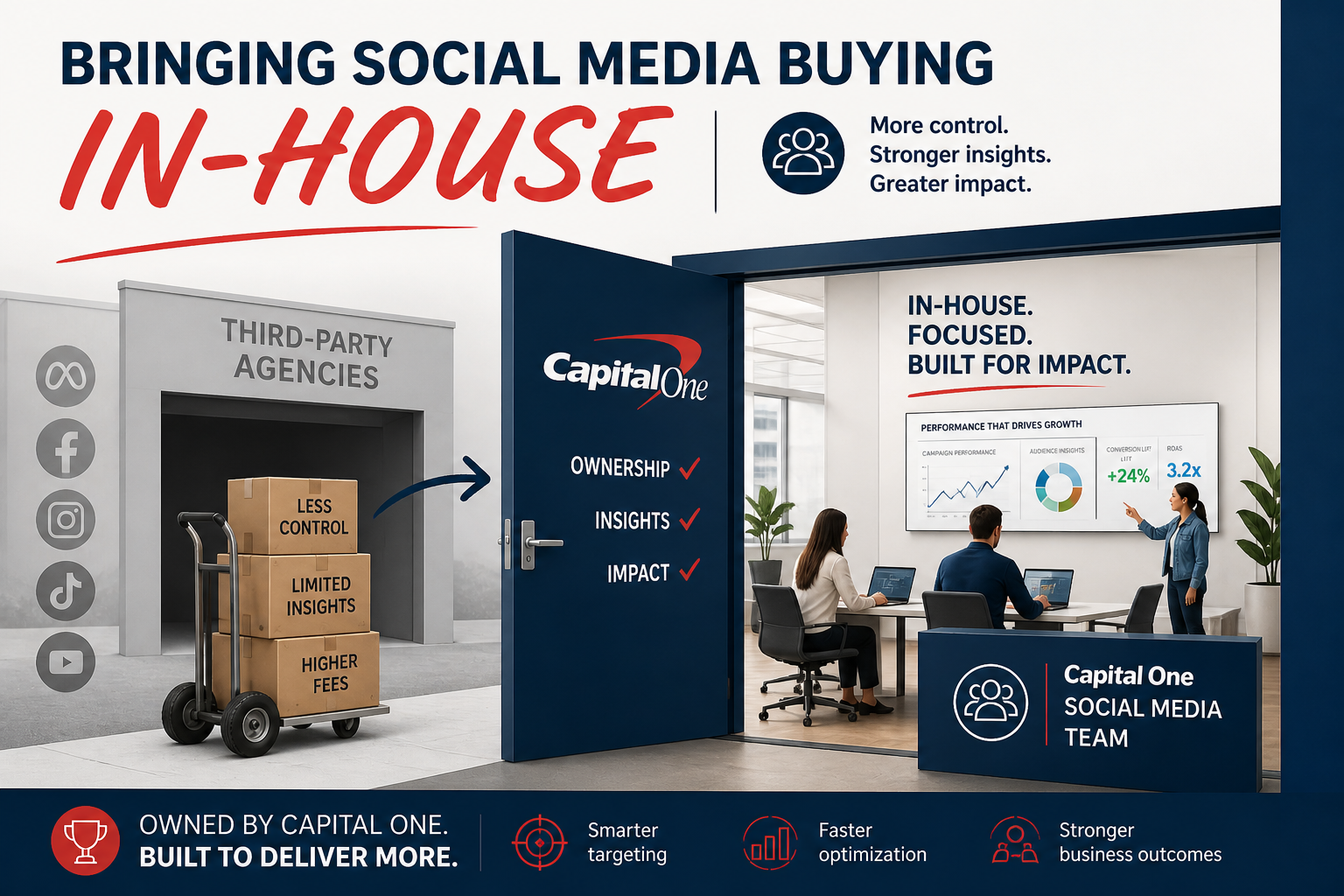
Capital One's Social Media In-Housing Move Is a Warning Shot for Agencies
Capital One is hiring a Social Media Manager with explicit ownership of both brand content and paid media — and the signal attached to that role isn't team expansion. It's in-housing. That distinction matters enormously. When a financial services giant with the marketing sophistication and budget scale of Capital One chooses to internalize social media buying and brand management into a single headcount, it isn't filling a gap. It's making a strategic statement about where it believes value is created, and more pointedly, where it no longer believes agencies are earning their keep.

The Pitch Is Dead. The Platform Deal Killed It.
The traditional pitch—polished decks, rehearsed narratives, and staged presentations—has quietly lost its power, not because storytelling no longer matters, but because decision-making has fundamentally changed. In a world where buyers and partners have access to real-time data, peer signals, and performance visibility, static narratives feel increasingly disconnected from reality. The pitch hasn’t just weakened; it’s been outpaced by environments where proof, access, and integration carry more weight than persuasion.
What’s replacing it is the platform deal: relationships built through ecosystems where value is demonstrated continuously, not declared in a moment. Instead of pitching for attention, companies are being evaluated through how they show up within platforms—data flows, partnerships, usage signals, and embedded experiences that make the “sale” almost ambient. The implication is a structural shift: growth is less about winning a room and more about being present in the systems where decisions are already being made.

The Destigmatization Economy: How Thorne's Women's Health Play Signals a Category Reinvention
The latest move by Thorne signals more than a campaign launch—it reflects a broader shift toward what can be described as a “destigmatization economy.” By tackling historically under-discussed topics like perimenopause and libido head-on, the brand reframes women’s health from a niche or sensitive category into a mainstream, addressable market. This shift aligns with a growing demand for transparency, science-backed solutions, and open dialogue, as consumers increasingly seek clarity around complex biological changes that have long been overlooked or misunderstood.
At a category level, this moment represents a reinvention of how women’s health is positioned and monetized. Long undervalued due to clinical bias, research gaps, and cultural stigma, the space is now emerging as both a healthcare priority and an economic opportunity. Brands like Thorne are not just introducing products—they are reshaping narratives, normalizing conversations, and unlocking latent demand by meeting women with credibility and candor. In doing so, they highlight a larger truth: destigmatization isn’t just cultural progress—it’s a growth engine redefining the future of health and wellness.
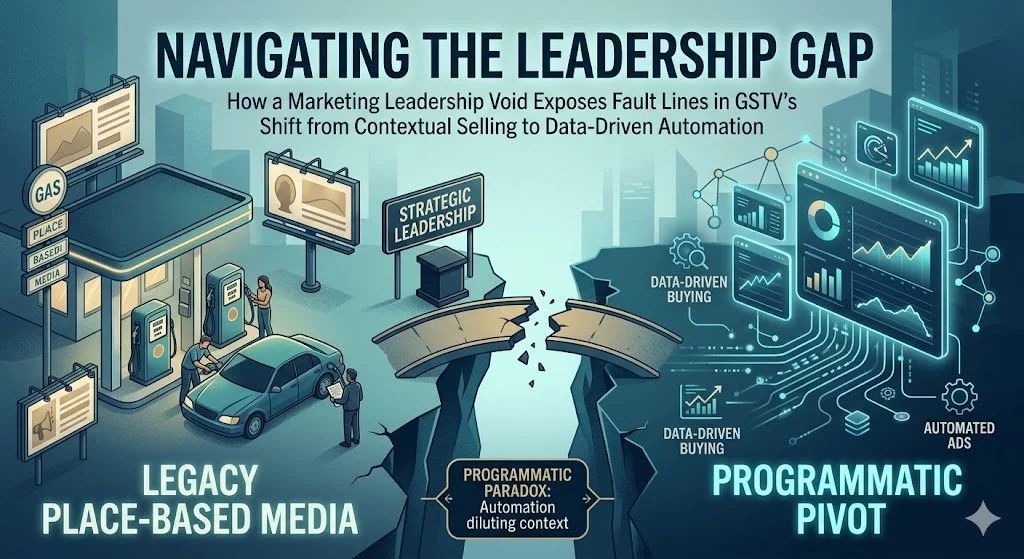
GSTV's Marketing Leadership Gap Exposes Fault Lines in Place-Based Media's Programmatic Pivot
This analysis explores the strategic hurdles facing the national video network as it navigates a transition toward programmatic advertising. By examining the impact of a recent lack of dedicated marketing leadership, the piece suggests that this internal void has hindered the company's ability to articulate its unique value proposition at a time when the Digital Out-of-Home (DOOH) sector is rapidly shifting toward automated, data-driven buying. The author argues that this leadership gap serves as a bellwether for broader industry struggles, specifically the difficulty of reconciling legacy place-based media models with the technical and narrative demands of the programmatic ecosystem. Ultimately, the analysis highlights a "programmatic paradox" where the push for automation threatens to dilute the contextual power of gas station media, serving as a cautionary tale that technical pivots are only successful when supported by a cohesive marketing strategy and visionary advocacy.
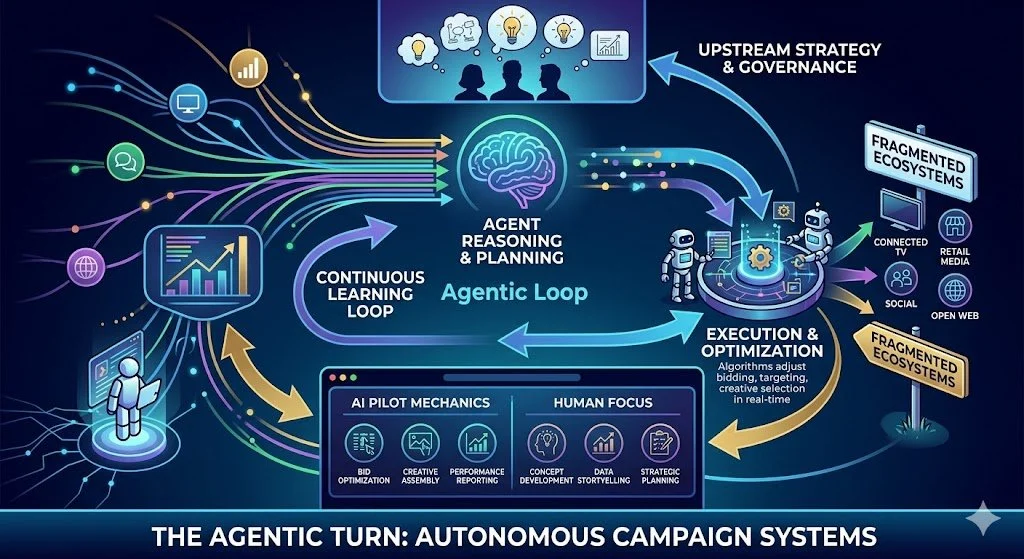
The Agentic Turn: Why Two-Thirds of Advertisers Are Building Autonomous Campaign Systems
The advertising industry is undergoing a fundamental shift from manual optimization to the adoption of autonomous "agentic" systems. Driven by a "velocity gap" where human workflows can no longer keep pace with the sheer volume of digital signals and complex channel ecosystems, approximately two-thirds of advertisers are now building or deploying AI agents. Unlike standard automation, these systems possess the ability to reason, plan, and execute multi-step campaigns independently. By moving beyond simple "if-then" logic to continuous learning loops, these agents allow for real-time adjustments in bidding, placement, and audience targeting across fragmented platforms like CTV and retail media.
This transition to an agentic model is redefining the human role within marketing, shifting it "upstream" from tactical execution to strategic governance. As machines handle the high-volume operational tasks that once provided a competitive edge, the primary driver of performance returns to the quality of the creative idea and human insight. To succeed, organizations are encouraged to move away from "bolting" AI onto broken, siloed workflows and instead adopt integrated "Agentic Operating Systems" that prioritize data transparency and brand safety. Ultimately, this shift aims to liberate marketing teams from manual orchestration, allowing them to focus on high-impact strategy and storytelling while autonomous "pilots" manage the mechanics of delivery.

The Living Room Just Became Addressable: What Sunday Robotics' $165M Raise Means for Brand-Consumer Interfaces
Sunday Robotics’ recent $165 million Series B funding round, which propelled the company to unicorn status, signals a transformative shift in the relationship between brands and consumers. By aiming to deploy autonomous humanoid robots into homes by late 2026, Sunday Robotics is positioning the living room as a newly "addressable" marketing channel where AI agents—rather than human impulse—become the primary decision-makers for household procurement. This evolution suggests a move toward "ambient commerce," where robots inventory supplies and execute replenishment purchases based on objective data like price, sustainability, and nutritional value, rendering traditional creative marketing and aspirational imagery increasingly irrelevant.
For brands and marketers, this shift necessitates a fundamental pivot toward "machine-readable brand equity." As home robots take over the role of household procurement officers, success will depend on a brand’s ability to provide structured, API-accessible data that AI can easily parse and compare. This creates a significant challenge for legacy CPG players who must overhaul their product information systems to remain competitive against nimble, tech-first insurgent brands. Ultimately, the rise of Sunday Robotics highlights a future where the most valuable consumer data is no longer found in search history or loyalty programs, but in the real-time behavioral "exhaust" of robots observing consumption patterns within the home.

Lands' End's Decade Without a CMO Ends: What the Heritage Brand Gamble Signals for Retail Marketing
The appointment of Sarah Sylvester as Lands’ End’s first Chief Marketing Officer in a decade marks the end of a long-standing experiment in "marketing by committee." For ten years, the heritage retailer operated under the assumption that product legacy and operational efficiency could replace high-level brand strategy. However, this period of decentralized leadership saw the brand drift toward demographic obsolescence, with the average customer age climbing to 58—significantly older than competitors like Patagonia and L.L. Bean. By bringing in a former Victoria’s Secret executive, Lands’ End is signaling a pivot from mere cost rationalization to active brand transformation, acknowledging that a heritage name alone is no longer enough to sustain growth in a fragmented digital market.
Sylvester faces the "Heritage Brand Paradox": the challenge of modernizing a 64-year-old brand to attract younger consumers without alienating the loyal, older base that provides the bulk of current revenue. This hire reflects a broader shift in the retail industry, where the CMO role is being redefined as a "transformation architect" who must bridge the gap between traditional catalog-driven models and modern, data-centric customer acquisition. As Lands' End attempts to capitalize on trends like "grandpacore" while navigating a world without third-party cookies, its success will serve as a high-stakes blueprint for other legacy retailers—such as Eddie Bauer and Talbots—striving to prove that demographic evolution can be both culturally relevant and profitable.

Grindr's CMO Promotion Signals the Maturation of Identity-First Digital Platforms
The promotion of Tristan Pineiro to Chief Marketing Officer signals Grindr’s evolution from a niche utility for "hookups" into a comprehensive "identity-first" digital ecosystem. Under Pineiro’s leadership, the company has repositioned itself as the "Global Gayborhood," moving beyond simple geolocation-based dating to focus on long-term community value. This maturation involves diversifying the platform’s offerings—integrating AI-driven matchmaking, original queer media content like "Grindr Presents," and health-focused services like "Woodwork"—to capture a broader share of the LGBTQ+ digital experience. By elevating a marketing leader who has successfully architected this brand transformation, Grindr is prioritizing cultural relevance and user trust as primary drivers for its next phase of global growth and monetization.
This strategic shift reflects a broader trend among digital platforms that cater to specific identity-based communities. Rather than competing solely on the basis of transactional features, these platforms are maturing into holistic social hubs that provide a "safe space" for expression, advocacy, and commerce. The emphasis on an "identity-first" approach allows Grindr to deepen its engagement with younger demographics, such as Gen Z, who increasingly seek digital spaces that align with their personal values and lifestyle needs. Consequently, the CMO’s role has transitioned from traditional user acquisition to serving as a strategic architect of community culture, ensuring that product innovation and brand storytelling work in tandem to foster a sense of belonging that transcends the app's original function.

Ireland's Brand Infrastructure Play: What a National Marketing Services Procurement Reveals About Post-Brexit Positioning
A mid-April RFP deadline from a major Irish organization serves as a high-stakes bellwether for the professionalization of marketing services across second-tier European markets. Beyond a routine agency search, this procurement signal represents Ireland’s strategic recalibration as the primary native English-speaking "Atlantic Anchor" within the EU, more than six years after Brexit. As U.S. tech and pharma giants entrench their headquarters in Dublin, domestic Irish enterprises are aggressively closing the capability gap, shifting their focus from tactical campaign execution to the installation of sophisticated, foundational marketing operating models.
The resulting competitive landscape creates a "Dublin-London-New York" triangle, where local agencies leveraging cultural authenticity must defend their turf against high-scale UK firms and relationship-heavy U.S. consultancies. This shift toward "consultification" suggests that the winner of this mandate won’t just be a creative vendor, but a strategic partner capable of navigating a fragmenting political and investment landscape. For MarTech vendors and global agencies, the April 16th deadline is more than a countdown—it is a window into a matured Irish market that will offer systematic, infrastructure-level opportunities through 2028.

Why a Wyoming Tourism Board's PR Search Signals the New Economics of Destination Marketing
Jackson Hole’s hunt for crisis communications and earned media expertise reflects a fundamental shift: elite destinations are abandoning promotion for protection. As resident pushback and climate volatility reshape the travel landscape, destination marketing organizations (DMOs) are no longer in the business of just driving visitor volume. They are becoming "reputation architects" tasked with managing community values, narrative control, and the license to operate.
Discover why the traditional tourism PR model is collapsing and why the agencies winning these high-value contracts look more like corporate affairs firms than travel shops.

The $250M Bet on Social Infrastructure Software—and What It Means for Corporate Purpose Strategies
Findhelp’s massive growth round signals the maturation of social care technology from a charitable afterthought to enterprise-grade infrastructure. For decades, "Corporate Purpose" was hamstrung by a lack of plumbing; brands had the intent to help, but no systematic way to connect resources to need or measure real-world outcomes. That era of performative CSR is ending. As investors price social care platforms like enterprise MarTech unicorns, the "social safety net" is officially becoming a B2B software category.
From API-led social determinants of health to "brand-as-utility" marketing models, discover why the infrastructure of impact is now a mission-critical requirement for the modern C-suite.

Healthcare's Marketing Awakening: Why B2B Pharma is Finally Building CMO Functions
In B2B healthcare, marketing has long lived in the shadow of sales, clinical development, and regulatory affairs. But that dynamic is shifting fast. As competition intensifies across pharma, medtech, and healthtech, companies are discovering that commercial success depends as much on narrative, positioning, and market intelligence as it does on clinical outcomes.
A new kind of marketing function is emerging—one built not just to support product launches, but to shape market perception, orchestrate complex stakeholder journeys, and translate scientific innovation into strategic advantage. The rise of true CMO leadership inside B2B pharma signals a broader awakening: marketing is no longer a downstream function. It’s becoming a central driver of growth.

Playboy's Brand Renaissance Signals the End of Legacy Publishing Playbooks
Playboy’s hiring of Phillip Picardi — the first openly gay Editor-in-Chief in the brand’s history — is more than a headline-grabbing appointment. It’s a window into the existential reckoning facing every legacy brand built on a cultural moment that has long since passed.
For decades, heritage publishers and lifestyle brands have tried to modernize without committing to change, tiptoeing between their original identity and the audiences they desperately need. Playboy’s own flip-flop on nudity became a cautionary tale in real time. But with Picardi at the helm — a proven editorial disruptor who transformed Teen Vogue from a fashion magazine into a cultural force — the brand is signaling something different: that survival requires courage, not compromise.

The Great Agency Replacement: How AI-First Platforms Are Rewiring SMB Marketing
When Mega closed its $11.5M Series A, it didn’t just secure a runway — it declared a pricing war on the traditional agency model. With 55% of campaign execution fully automated, the Austin-based platform is approaching the threshold where the unit economics of human-led marketing services simply stop making sense for businesses under $50M in revenue. The question facing every agency principal right now isn’t whether AI will encroach on their territory. It’s how much territory is already gone.

The Marketing Agent Revolution: Why Kana's $15M Seed Round Signals the End of Marketing as We Know It
Kana’s $15M seed round isn’t just another MarTech funding story. It’s an early signal that the $350B marketing services industry is approaching its own iPhone moment — where autonomous AI agents don’t just assist marketing decisions, they make them. The analytical work that consumes marketing teams today is becoming the domain of algorithms.

P.F. Chang’s and the Loyalty Reset: When CRM Becomes the Growth Engine
A new CMO at P.F. Chang’s may signal more than a brand refresh. With an established Paytronix loyalty foundation already in place, the real opportunity lies in modernizing CRM from a promotional tool into a profit engine — where identity, lifecycle, and measurement drive growth.